What Reaction Time Tests Are Acidentally Measuring
Research note

This post is my research note exploring what reaction time tests measure beyond reflex speed.
Research Question
What cognitive process do standard reaction time tests actually measure?
Baseline Assumption
A common assumption is that faster reaction time indicates faster reflexes.
However, reaction time tests involve voluntary, anticipatory responses, whereas reflexes are involuntary. This suggests reaction time tests cannot directly measure reflex speed.
Definitions
Reflex — An involuntary, stimulus-triggered response.
Reaction Time — The interval between stimulus presentation and voluntary motor action.
Anticipation — Pre-activation of motor readiness in expectation of a stimulus.
Observations
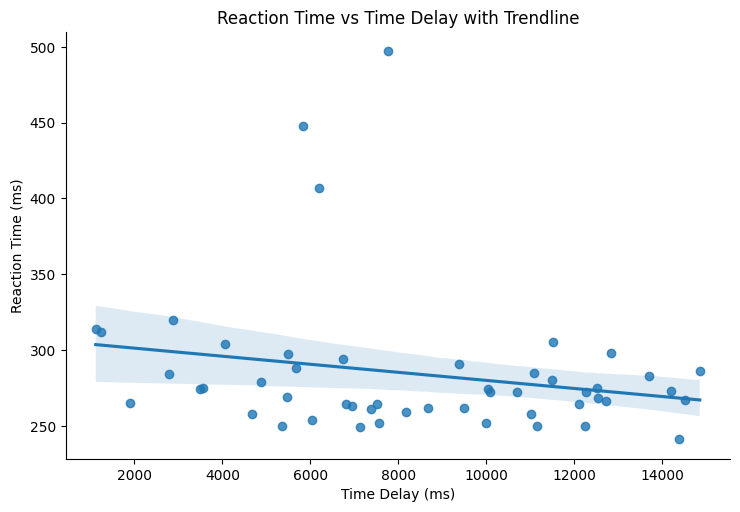
Repeated reaction time testing revealed that longer random delays often produced faster reactions. This implies performance is influenced by anticipation rather than raw response speed.
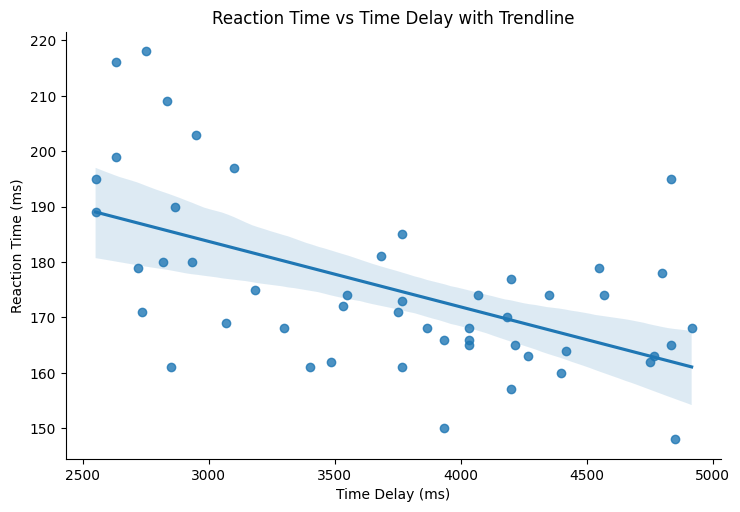
Using Lovable, a Custom Test was made to customize delay ranges. When delay ranged were extended to 1-15 seconds, reaction times did not improve linearly. Instead, they appear to oscillate across trials.
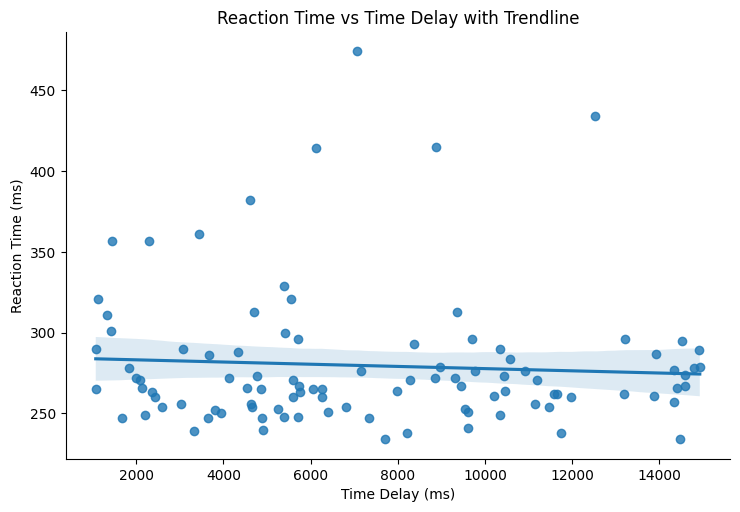
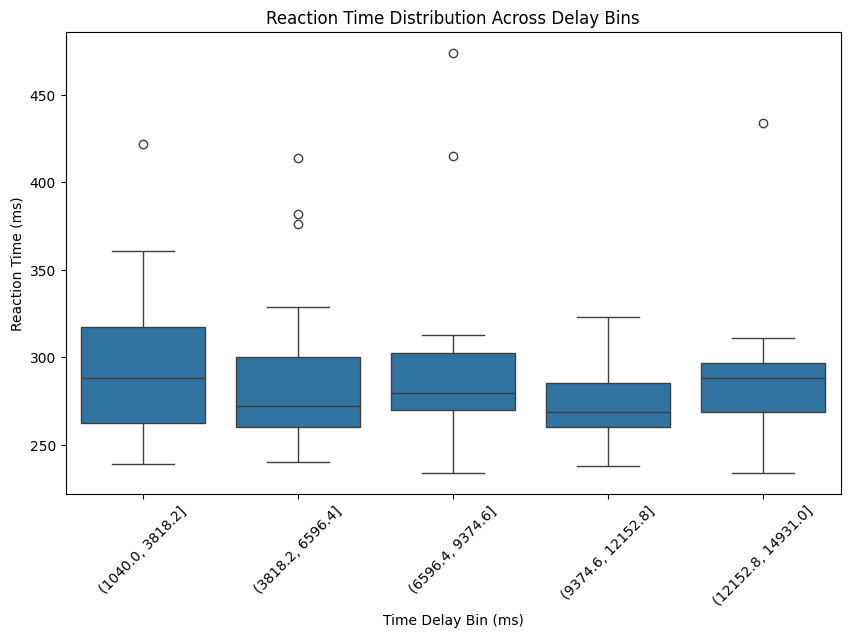
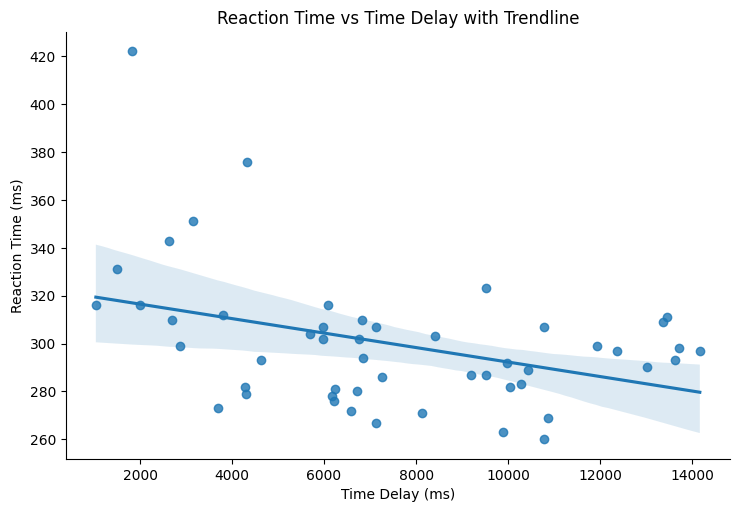
When tests with 1-15 second delay were taken again, the oscillation was no longer visible. Potentially implying the more tests you take, the less you anticipate.
Short Cycle:
Professional Counter Strike players would strafe left and right at ~500 ms (0.5s) from the start of the action to the end of the action.
Long Cycle:
Professional Counter Strike players would hold a position at ~2000-3000 ms (2-3s) from the start of the action to contact with enemy.
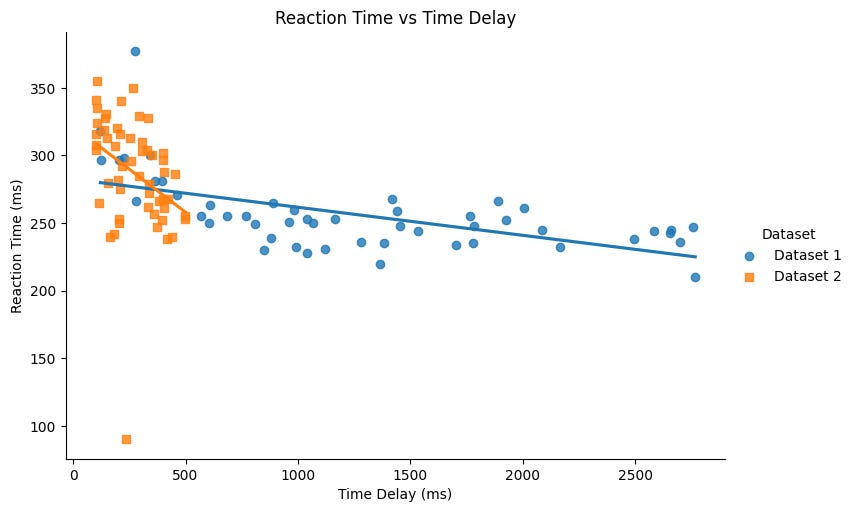
When comparing Reaction Time Tests with delays of 0.1-0.5s and 0.1-3s, the long cycle outperformed the short cycle when the delay was near 3 seconds.
Anticipation Cycles
The data suggests the existence of multiple anticipation modes:
Short anticipation cycle: ~500 ms
Long anticipation cycle: ~2000-3000 ms
Each cycle optimizes reaction speed under different uncertainty conditions.
Cross-Domain Evidence
Similar anticipation patterns appear in competitive domains:
First-person shooters: Movement maintains short cycles; holding positions engages long cycles.
Tennis and baseball: Long cycles initiate prior to serve or pitch.
Table tennis: Constant movement resets short cycles due to rapid exchange.
This suggests anticipation cycles are actively selected, not fixed traits.
Key Insight
High-level performance is not primarily about reacting faster, but about selecting the anticipation cycle that maximizes success under current conditions.
Speculation
Anticipation cycles appear to require a grounding action (e.g., movement or postural commitment). Without grounding, the system defaults to autopilot and loses anticipatory structure.
Open Questions
Can anticipation cycles be trained or optimized?
Do optimal cycle lengths vary across individuals or tasks?
What mechanisms govern switching between cycles?